
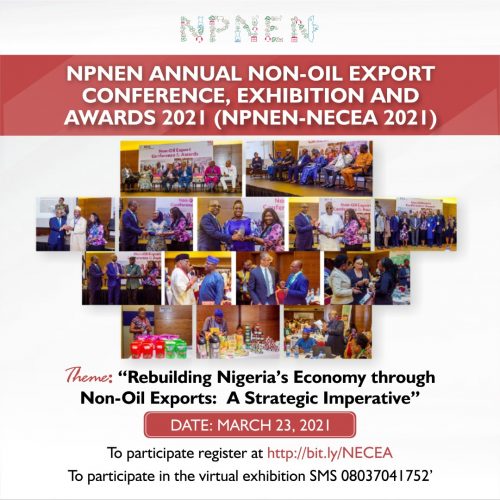
NPNEN ANNUAL NON-OIL EXPORT CONFERENCE, EXHIBITION AND AWARDS 2021 (NPNEN-NECEA 2021) - A SPECIAL VIRTUAL STAKEHOLDERS ENGAGEMENT ON IMPERATIVES OF A NON-OIL EXPORT SOLUTION TO NIGERIA’S PROBLEMS
One of the principal objectives of the network is to engage with public sector regulatory agencies and export trade support institutions to craft strategies, programs and activities that will lead to an increase in Nigeria’s participation in global trade, with the direct impact being an enhancement of foreign exchange earnings from the non-oil export sector. The flagship event, which is also the vehicle for actualizing the objective is the annual Non-oil Export Conference, Exhibition and Awards (NECEA)
The event is envisaged to bring together critical stakeholders in the non-oil sector including top officials of government, civil society, private sector, the media and academia to dialogue on how to refocus the country’s non-oil sector, for a more effective participation in global trade, especially within the framework of the recently operationalized African Continental Free Trade Agreement.
The NECEA is also very necessary now given the current state of Nigeria’s economy as evident in the downward spiraling of the country’s currency vis-à-vis the US Dollar and other world currencies. There is certainly a need to revitalize the economy primarily through non-oil exports.
The proposed theme for NECEA 2021 is “Rebuilding Nigeria’s Economy through Non-oil Exports: A Strategic Imperative”
Objectives of NECEA
The following are the objectives of NECEA:
- Provide a forum for serious public-private sector dialogue to reposition non-oil exports as a major foreign exchange earner and significant contributor to Nigeria’s GDP.
- Design the appropriate strategy to enable Nigerian exporters effectively launch into the new single African market.
- Promote the needed application of modern technology to drive non-oil export within the global “new normal”.
- Use the virtual exhibition to showcase new opportunities in Nigeria’s and export-ready products and services.

Given that all the nation’s trade support institutions are domiciled within the Ministry of Industry, Trade and Investment, NPNEN-NECEA 2021, would provide an appropriate platform for each of the parastatals to come together with the full complement of Nigeria’s exporters to discuss their various strategies. NEPC, for example, has developed a robust Zero-Oil Plan, which it has advocated over the past few years. NEPZA has also introduced innovations in Free Zone practices that now make it easier for relatively “smaller” players to enjoy the benefits of Free Zones and Special Economic Zones status. The new MD at NEPZA certainly has several offerings to the non-oil export community and this event should provide an appropriate platform to launch these. NIPC, should also be able to use the platform to market Nigeria as a veritable Industrial Outpost where-in foreign investors could be invited to use Nigeria as production base for their already established markets abroad.
It is needless to say that the non-oil export sector has taken a nosedive since the technical suspension of the Export Expansion Grant about four years ago. The Ministry, through NEPC, has been working on several alternatives to EEG as policy support instruments to revive Nigeria’s export performance and to enhance the competitiveness of the country’s exports in the international marketplace. NPNEN-NECEA will therefore provide an appropriate platform for government to present its alternative policies with a view of securing the buy-in of the targeted operators.
Event Format
NECEA is a hybrid event with both physical and virtual formats. The physical event will be held in Abuja, Nigeria while participants all around the world can join via Zoom.
The event will have 3 segments:
- Conference
- Virtual Exhibition of Products and Services
- The Awards


 The pre-export requirements recently introduced by the Central Bank of Nigeria is currently frustrating the export of goods from Nigeria to other nations, exporters declared on Wednesday.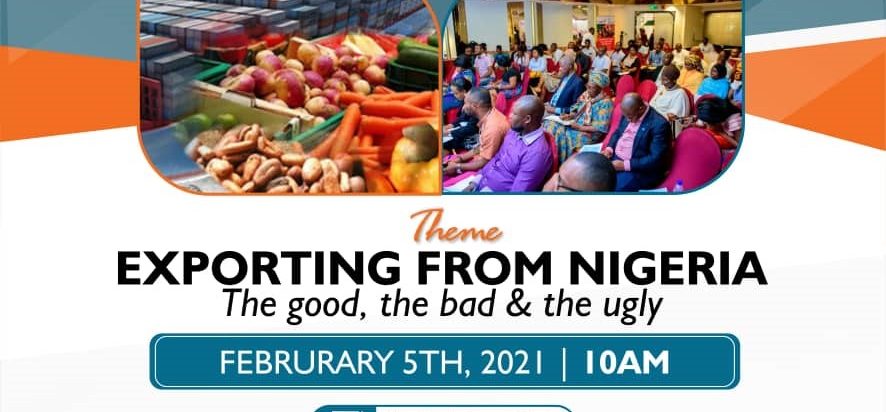
 NPNEN has as one of its principal objectives engagement with public sector regulatory agencies and export trade support institutions to craft strategies, programmes and activities that will lead to an increase in Nigeria’s participation in global trade with the direct impact being an enhancement of foreign exchange earnings from the non-oil export sector. Believing strongly in an export-driven economy.
 While we were eagerly awaiting an invitation from the Central Bank of Nigeria to seek the input of the real players in the industry – practising exporters -, we, Network of Practicing Non-Oil Exporters of Nigeria, were shocked to receive the apex bank’s recent circular with reference number TED/EXP/CON/NES/01/001 and dated January 13, 2021 which directs commercial banks to bar and blacklist any exporter who has not repatriated export proceeds in the last two to three years. The circular, indeed, instructs that such exporters should be barred from accessing all banking services, as contained in an earlier circular with reference number CBN/FEM/FPC/GEN/01/013 and dated October 26, 2017. As the Umbrella network for all players in Nigeria’s non-oil export value-chain, NPNEN had issued a Press statement less than two weeks ago, decrying the autocratic approach of the Central Bank of Nigeria in issuing an equally draconian directive to shipping companies not to take on board any consignment that has not yet completed the newly introduced e-NXP. This flurry of “military” instructions is even more worrisome as we believe that what Government (through its assigned agencies such as the CBN, should be doing at this time is roll out a basket of incentives capable of boosting non-oil exports and making the sector, a veritable and significant generator of the much-needed foreign exchange for Nigeria. While the CBN has the right to explore all avenues to shore up the country’s foreign reserves, it must tread carefully to avoid a ricochet effect that actually ends up sending exporters to the smugglers’ routes and thereby destroying the very intention of the bank to increase foreign exchange inflows. We hasten to advise that it is very important for the CBN understand that churning out orders, rather than calling the players to a round table where the bank’s (government’s) plans are presented and the players are given the opportunity to explain how each of the steps being mooted will affect export performance, portends a very grave danger. These wrong signals might persuade the exporting community that the federal government is not concerned about their plight and does not care about the huge losses they are currently incurring.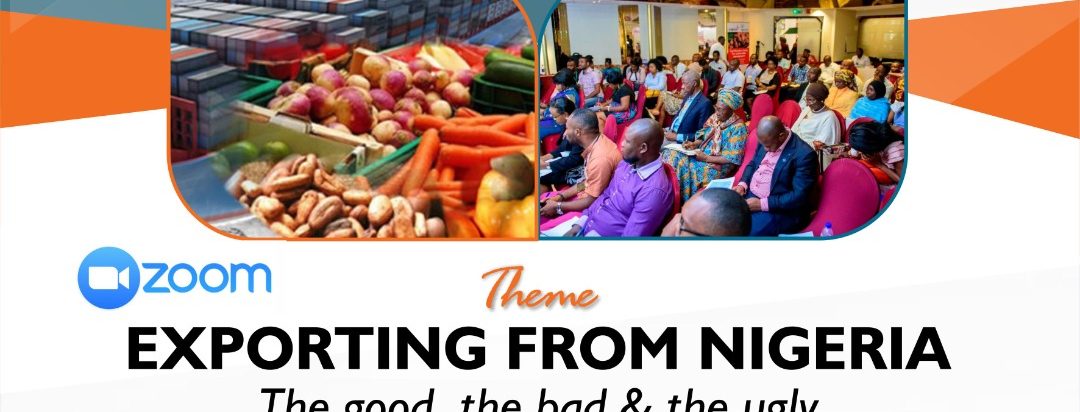
 NPNEN has as one of its principal objectives engagement with public sector regulatory agencies and export trade support institutions to craft strategies, programmes and activities that will lead to an increase in Nigeria’s participation in global trade with the direct impact being an enhancement of foreign exchange earnings from the non-oil export sector. Believing strongly in an export-driven economy.